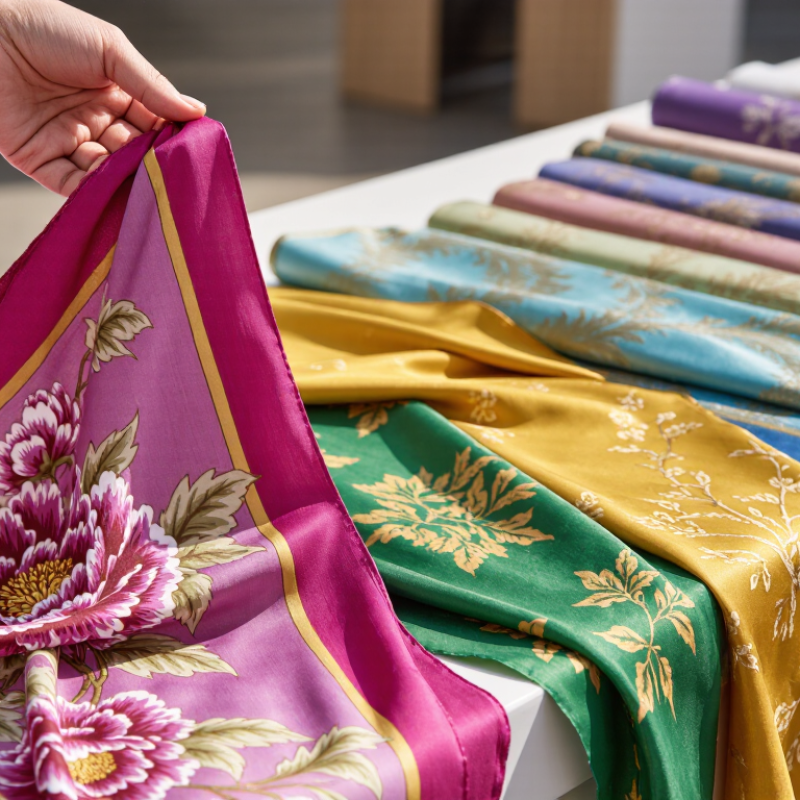
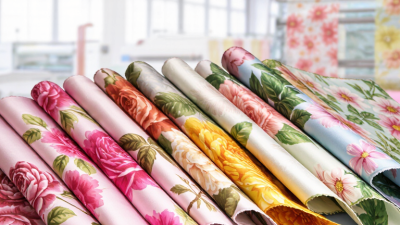
Choosing a supplier for Floral Print Silk Fabric involves more than comparing pattern books and quoted prices. Buyers need to assess silk quality, print clarity, color consistency, minimum order quantities, and communication across time zones. A vivid peony or fine botanical repeat may look beautiful on a screen, yet lose detail when printed on a delicate silk weave. Request physical swatches. Check the reverse side, hand feel, and color under daylight. Small checks matter.
William Morris, the British designer and textile maker, wrote, “Have nothing in your houses that you do not know to be useful, or believe to be beautiful.” His principle offers a useful lens for floral textiles: a print should appeal visually and perform in its intended use. This guide introduces ten suppliers for global buyers, with attention to fabric options, customization, sampling, and export support. No supplier is perfect. Some offer broad pattern libraries but limited low-volume orders; others provide careful custom work with longer lead times. Buyers should confirm specifications directly and test fabric for the finished garment or product. A sample is not a promise of every production batch. Still, it reveals more than a polished catalog can.
Floral print silk combines a natural protein fiber with motifs created through digital or screen printing. Its smooth surface can show fine petal edges and subtle color shifts, making it useful for dresses, scarves, blouses, and lightweight interior accents. The Textile Exchange Materials Market Report 2024 estimates global fiber production reached 124 million tonnes in 2023, up from 116 million tonnes in 2022. Silk is a small, specialized choice within this enormous market, so buyers should compare fabric specifications rather than assume every printed silk behaves alike.
FAO’s 2023 raw-silk statistical compendium tracks production by country and identifies China and India among the key producing regions. For global purchasing, ask suppliers to state the silk type, fabric weight, print method, and test results for colorfastness and shrinkage. A bright floral sample may look vivid under showroom lights, then soften in daylight. Check it near a window. Also rub a damp white cloth across a printed area; dye transfer can matter in humid climates and frequent-wash applications. Silk is not magic. Its drape and sheen are appealing, but care requirements and batch variation deserve attention. Even matching two floral lots can be harder than expected.
Fiber density is a material property, not the weight of a finished fabric. Silk’s density is comparable to wool’s and lower than cotton’s, offering useful context when buyers compare fabric compositions for floral-print applications. Values are typical reference figures; actual fibers and finished fabrics can vary.
Source: M. L. H. Martin and R. H. S. Hearle, Physical Properties of Textile Fibres, 4th edition.
A floral silk print can look vivid on a screen and dull under daylight. Ask suppliers for a physical sample, then check it beside a window and under indoor lighting. Look closely at motif edges, color consistency, fabric weight, and the reverse side. A small swatch may hide flaws. Request a larger cutting before placing a bulk order.
Quality claims should be supported by clear specifications, not adjectives alone. Confirm fiber content, width, weight, printing method, and care guidance in writing. If colorfastness matters, ask for relevant test results and clarify how they were produced. Range matters too. Compare floral scales, colorways, and repeat dimensions, since a print that suits a scarf may feel crowded on a dress. Reliability is harder to judge from a catalogue. Ask about sample and production lead times, minimum quantities, and how delays are communicated. Check that answers stay consistent across email, quotation, and sample documents. One awkward exchange is not proof of poor service, but it deserves a question. I would not treat a polished sample as a guarantee; production batches can still vary. Agree on inspection criteria before ordering, and keep approved samples for comparison.
The profiles below describe ten useful supplier types, not verified company rankings. Supplier 1 specializes in lightweight silk charmeuse, suited to flowing dresses and scarves. Supplier 2 offers digitally printed silk, with detailed flowers and short-run options. Supplier 3 focuses on hand-screen printing; slight pattern variations may occur. Supplier 4 supplies silk crepe, whose textured surface softens fine floral outlines.
Supplier 5 works with small studios and may accept modest order quantities. Supplier 6 serves larger production runs, where consistent repeat patterns matter. Supplier 7 emphasizes muted botanical palettes for understated garments. Supplier 8 offers vivid, high-contrast prints for statement pieces. Supplier 9 provides custom artwork development, but buyers should confirm design ownership terms. Supplier 10 combines fabric sourcing with finishing services, such as washing or hemming. Compare actual samples rather than relying on product photos. A screen can distort color, and one swatch may not show batch variation.
Tips: Request fabric weight, silk composition, print method, minimum order, and estimated lead time in writing. Test a sample for color transfer and shrinkage before approving bulk production. Ask how repeat orders are matched. Small differences can matter. A supplier’s polished catalog is useful, but it is not proof of consistent quality.
Top 10 Floral Print Silk Fabric Suppliers for Global Buyers
Comparing Supplier Capabilities for Different Buyer Needs
Global buyers should compare suppliers by fit, not rank alone. A small apparel studio may need low minimum orders and quick strike-offs. A large fabric distributor may value stable production capacity, repeatable color, and clear delivery schedules. Ask how suppliers handle artwork scale, print alignment, and silk weight. These details shape the finished fabric. Small details matter.
Request a sample printed on the intended silk base, not just a paper color card. Check the motif edges, fabric hand, and color under daylight and indoor lighting. Ask for test information on colorfastness and shrinkage, plus written details about lead times and quality checks. Strong suppliers can explain their process clearly. A polished sample is useful, but it cannot guarantee every bulk roll will match. That uncertainty deserves attention.
Tips: Send a clear repeat size, color references, and fabric-weight target with your inquiry. Compare sample fees, minimums, and production timelines side by side. If a supplier gives vague answers, pause and ask again. It may slow your search, but it can prevent an expensive mismatch.
The entries below are anonymous supplier capability profiles, not named or independently verified vendors. MOQ, lead time, print suitability, and certification availability vary by mill, fabric construction, order size, and destination. Treat the ranges as indicative sourcing benchmarks and confirm details directly with prospective suppliers.
| Profile | Typical silk options | Floral print capability | Indicative MOQ | Indicative bulk lead time | Best suited to | Buyer checks |
|---|---|---|---|---|---|---|
| Supplier 01 — Stock-fabric specialist | Common silk charmeuse, crepe de chine, and twill constructions, subject to stock | Printed designs selected from available collections; limited exclusivity unless separately agreed | Often lower for available stock; confirm by color and lot | About 1–3 weeks for available goods; longer if replenishment is needed | Small brands, sampling, and repeat orders using existing designs | Stock quantity, dye-lot consistency, usable width, and return terms |
| Supplier 02 — Custom digital-print specialist | Lightweight silk qualities, often including habotai, charmeuse, and crepe de chine | Suitable for detailed artwork, gradients, and multi-color floral repeats; results depend on fabric and process | Can be relatively low for digital runs; request the minimum per design and colorway | Typically several weeks after artwork and strike-off approval | Design-led labels, varied colorways, and shorter production runs | Color profile, print scale, repeat alignment, wash performance, and strike-off approval |
| Supplier 03 — Rotary-screen production specialist | Silk and silk-blend fabrics suited to the supplier’s available print line | Can suit repeated motifs and larger runs; setup and color separation affect economics | Usually higher than stock or small digital orders; confirm minimums per design and color | Often around 4–8 weeks after approvals, depending on queue and finishing | Established collections with repeat demand and larger quantities | Screen/setup charges, color limits, strike-off, repeat accuracy, and over/under-run policy |
| Supplier 04 — Premium silk-weaving mill | Higher-grade woven silk options; construction and weight are typically specified to order | Print capability may be in-house or handled by a partner; verify process and responsibility | Often moderate to high for custom weaving; stock options may require less | Allow several weeks for development and production; custom weaving can take longer | Luxury apparel and buyers needing specific hand feel or fabric construction | Fiber-content test, weight tolerance, construction, finishing, and print subcontracting |
| Supplier 05 — Silk-blend value supplier | Silk blends, such as silk with viscose or cotton, depending on the range offered | Floral printing is possible on many blends; appearance and color response depend on fiber mix | Varies by stock and custom production; often more flexible for standard qualities | About 3–7 weeks for production orders, subject to material availability | Buyers balancing silk content, cost, and design variety | Exact fiber percentages, care labeling, test results, and country-of-origin rules |
| Supplier 06 — Development and sampling partner | A selection of silk bases that can be sampled before bulk commitment | May support artwork adjustment, scale trials, and print sampling; scope varies by supplier | Sampling quantities may be small; bulk minimums are quoted separately | Sampling often adds time; bulk timing starts after written approval | New designs, first-time sourcing, and buyers needing pre-production review | Sample fees, approval stages, color tolerances, and ownership of supplied artwork |
| Supplier 07 — Responsible-sourcing focused supplier | Silk qualities with documented sourcing information where available | Print methods and chemical controls depend on the production site and specific order | Depends on the certified or documented material and production route | Allow additional time for document review and any required testing | Buyers with traceability, restricted-substance, or social-compliance requirements | Current certificates, scope, facility coverage, transaction documents, and test reports |
| Supplier 08 — Export-ready fabric wholesaler | Ready-to-ship silk and silk-blend fabrics, depending on warehouse inventory | Primarily existing printed designs; custom printing may require a separate production order | Can be low for in-stock rolls; check roll length and minimum shipment value | Dispatch may be quick for stock; international transit and customs are additional | Buyers prioritizing availability and consolidated shipments | Live inventory, packing details, export documents, Incoterms, and shipment insurance |
| Supplier 09 — Apparel-program production partner | Silk fabrics selected to match a buyer’s garment specification and production plan | May coordinate fabric, printing, inspection, and garment-program requirements | Usually linked to the production program; confirm fabric-only order minimums | Depends on coordinated material and garment schedules | Brands managing seasonal collections or integrated apparel orders | Capacity allocation, inspection standards, production milestones, and change control |
| Supplier 10 — Custom-color and finishing specialist | Selected silk bases with options for hand feel, drape, and surface finish | May offer custom color matching and finishing alongside floral print production | Custom color or finish may increase the minimum; obtain a written quote | Several weeks or more when lab dips, finishing, and approval rounds are required | Buyers with precise palette, drape, or surface-effect requirements | Lab-dip approval, finish durability, colorfastness testing, and bulk shade tolerance |

Before placing an order, request a physical sample, confirm silk content and usable width, review print and color approvals, and obtain written production timing, payment terms, inspection criteria, and shipping terms. Any certification claim should be checked against a current certificate and its applicable facility, product, and scope.
Global sourcing of floral print silk starts with a clear specification. State the silk content, fabric weight, width, finish, and acceptable print variation before requesting quotes. Ask suppliers to identify whether the fabric is woven or printed using another process. Those details affect drape, pricing, and care instructions. A low quote means little if the shade shifts between production lots.
Request a sample cut from the intended production run, not only a polished showroom swatch. Check the print against a ruler, then inspect the fabric under daylight and indoor lighting. Test a small piece for color transfer, shrinkage, and seam behavior. Samples matter. Record results by lot and keep a dated reference swatch. Even careful checks have limits; a small sample cannot reveal every flaw in a full roll.
Before shipment, confirm roll length, packing method, invoice details, and the stated country of origin. Ask for fiber composition and any test reports relevant to the buyer’s market. Import classification can depend on construction and material, so verify the tariff code with a qualified customs professional. Requirements differ by destination. Build time for document review and possible inspection into the schedule. One missed label or inconsistent description can delay delivery, even when the fabric itself is excellent.