Leave Your Message
Global sourcing decisions increasingly depend on performance, traceability, and environmental responsibility. Natural Stretch Fabric brings these priorities together through fibers such as organic cotton, responsibly sourced wool, and natural rubber. It can offer softness, breathability, and controlled recovery for activewear, underwear, knitwear, and travel clothing. A fabric roll should not only feel smooth. It should survive repeated washing, warehouse handling, and long-distance shipment.
Giusy Bettoni, founder and CEO of C.L.A.S.S., has said, “Sustainability is not a trend; it is a new way of doing business.” Her view is useful for sourcing teams because material choice affects the entire supply chain. Suppliers must examine fiber origin, spinning methods, dyeing practices, finishing chemicals, and factory conditions. Certifications such as GOTS or OCS can support verification, but they do not replace supplier audits or physical testing. A certificate is evidence. It is not the whole answer.
Natural Stretch Fabric may reduce dependence on fully synthetic constructions, yet it is not automatically sustainable. Some blends remain difficult to recycle. Natural fibers can also require significant water, land, or energy. That uncomfortable detail matters. Buyers should request test reports for stretch recovery, shrinkage, colorfastness, and pilling. They should also compare performance after ten or twenty wash cycles. A soft sample can deceive. Global sourcing works better when suppliers share production data, realistic lead times, and corrective actions. The strongest choice is not always the greenest label. It is the material that performs reliably, meets verified standards, and fits the product’s actual use.
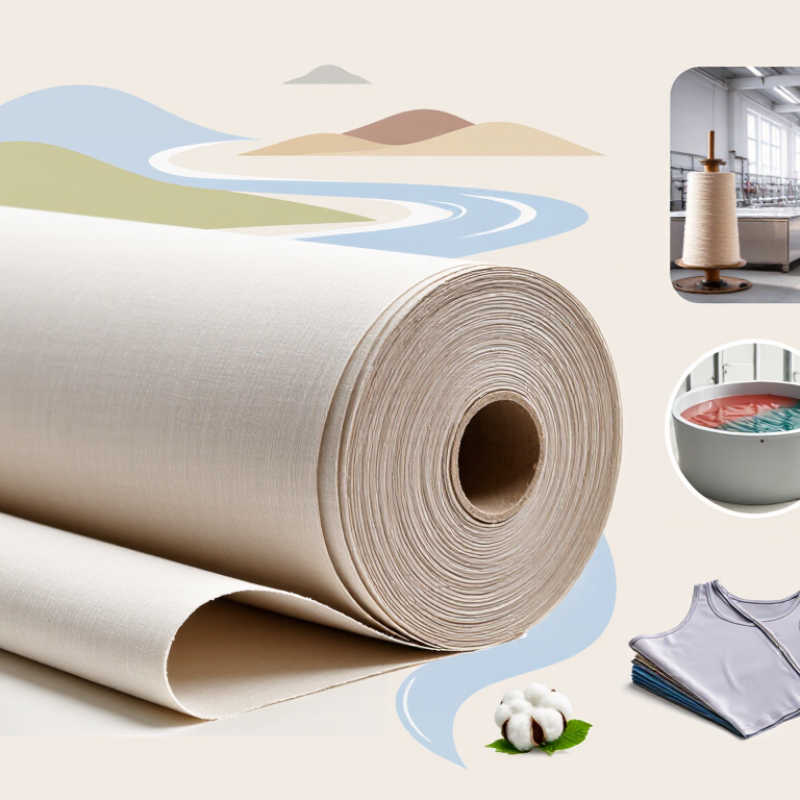
Natural stretch fabric is a textile that moves without feeling rigid or restrictive. It usually contains natural fibers, such as cotton, linen, wool, or bamboo-derived cellulose, combined with stretch yarns or a flexible construction.
The term can be confusing. Some fabrics stretch because elastane is blended into the fiber content. Others gain movement from knitted loops or a special woven structure. A cotton fabric with two percent elastane may stretch farther than plain cotton, while a linen knit may move through its looped construction. These fabrics are not identical.
In sourcing work, I check fiber composition, stretch percentage, and recovery after movement. A sample should be pulled across the width, held briefly, and released. Good recovery leaves fewer visible ripples. I also compare measurements before and after washing, because natural fibers can shrink unevenly. Small differences matter.
Natural stretch can improve comfort in trousers, shirts, uniforms, and everyday apparel. It may also reduce pressure at the knees, elbows, and waist. However, stretch performance depends on yarn quality, fabric weight, finishing, and sewing tension. A soft sample is not automatically durable.
The label needs care.
Suppliers should provide test reports and clear composition details. Buyers should confirm washing conditions, colorfastness, dimensional stability, and restricted-substance compliance for the target market. My experience is that early testing prevents expensive revisions, although no laboratory result replaces checking the finished garment. Some fabrics still surprise you.
| Evaluation Dimension | What Natural Stretch Fabric Means | Typical Natural Fiber Content | Stretch Mechanism | Common Applications | Global Sourcing Considerations |
|---|---|---|---|---|---|
| Definition | A textile containing natural fibers, engineered or blended to provide controlled elasticity and improved comfort. | Usually cotton, wool, linen, hemp, or regenerated cellulose fibers such as lyocell or modal, combined with a small elastic component or a mechanical-stretch construction. | Either fiber elasticity, yarn construction, fabric structure, or the addition of an elastomeric fiber such as elastane. | Apparel, uniforms, underwear, casualwear, trousers, denim, active lifestyle garments, and home textiles. | Confirm fiber composition, stretch direction, recovery performance, test methods, and applicable import labeling rules before production. |
| Comfort and Hand Feel | Natural fibers can provide softness, moisture absorption, breathability, warmth, or a dry tactile feel depending on the fiber and finish. | Cotton and cellulosic fibers are commonly selected for softness and moisture management; wool is valued for warmth and temperature regulation. | Stretch yarns and fabric construction add ease of movement without replacing the natural-fiber surface character. | Shirts, dresses, travel clothing, knitwear, workwear, and next-to-skin products. | Request hand-feel standards, wash samples, and color approvals because finishing and dyeing can change softness and drape. |
| Stretch Level | Stretch may be comfort stretch, moderate stretch, or high stretch depending on fabric design and elastane percentage. | A small elastane addition is often used in woven and knitted fabrics; exact percentages vary by end use and construction. | Two-way stretch generally extends across one direction, while four-way stretch extends in both length and width directions. | Comfort-fit trousers may require moderate crosswise stretch, while close-fitting garments may require multidirectional stretch. | Specify stretch percentage separately for width and length, using a defined test condition and recovery time. |
| Shape Recovery | Shape recovery describes how well a fabric returns toward its original dimensions after being stretched. | Fabrics containing elastane typically recover better than purely mechanical-stretch fabrics, although performance depends on yarn quality and finishing. | Elastic recovery is affected by fiber blend, fabric weight, knit or weave structure, repeated loading, heat, and laundering. | Knee-sensitive trousers, fitted garments, cuffs, waistbands, and performance-inspired casualwear. | Set acceptance limits for growth and recovery after repeated stretch and wash cycles rather than judging stretch by touch alone. |
| Breathability and Moisture | Natural cellulosic fibers can absorb moisture, while fabric structure determines drying speed and air permeability. | Cotton, linen, hemp, lyocell, and modal are commonly used where moisture absorption and comfortable next-to-skin wear are important. | Stretch components can improve fit but may slightly influence air permeability and moisture transfer when used at higher levels. | Warm-weather apparel, base layers, shirts, sleepwear, and lightweight uniforms. | Evaluate fabric weight, air permeability, absorbency, drying behavior, and climate suitability for the target market. |
| Durability | Durability depends on fiber strength, yarn quality, fabric weight, construction, dyeing, finishing, and care conditions. | Cotton, linen, hemp, wool, and regenerated cellulose each have different abrasion, pilling, strength, and wet-processing characteristics. | Elastane improves extensibility but can be sensitive to excessive heat, chlorine, ozone, oils, and harsh processing conditions. | Workwear, uniforms, denim, travel garments, and frequently laundered apparel. | Conduct abrasion, pilling, tensile, tear, seam-slippage, and dimensional-stability tests appropriate to the product category. |
| Sustainability Profile | Natural stretch fabrics can reduce reliance on fully synthetic surfaces, but the environmental profile depends on farming, forestry, processing, blending, dyeing, use, and end-of-life. | Potentially renewable fibers include cotton, flax, hemp, wool, and certified wood-based cellulosic fibers. | Blends containing elastane may complicate fiber separation and recycling compared with single-fiber fabrics. | Products where comfort, durability, renewable feedstocks, or material traceability are purchasing priorities. | Verify sustainability claims through recognized certifications, chain-of-custody documents, transaction records, and supplier audits. |
| Care and Stability | Natural fibers may shrink, crease, felt, or change appearance if care conditions are not controlled. | Cotton and linen can crease; wool can felt; regenerated cellulosics may require careful dimensional control. | Heat and aggressive chemicals can reduce elastic performance, while repeated laundering may affect stretch recovery. | Retail apparel, hospitality uniforms, schoolwear, and garments requiring repeat home laundering. | Approve care instructions after laundering trials and confirm dimensional change in both length and width. |
| Quality-Control Metrics | A sourcing specification should translate comfort and performance expectations into measurable requirements. | Fiber composition, fabric weight, width, colorfastness, pilling, strength, and dimensional stability are commonly checked. | Stretch percentage, growth, recovery, power, and repeated-cycle performance should be measured using consistent laboratory procedures. | All natural stretch fabric categories where repeatability between production lots is essential. | Use approved laboratory methods, control samples, lot inspection, shade bands, and pre-shipment testing to reduce supply-chain variation. |
| Best Sourcing Fit | Most suitable when buyers need natural touch, everyday comfort, controlled movement, and a differentiated material story. | The ideal blend depends on climate, garment silhouette, target price, performance requirements, and sustainability objectives. | Mechanical stretch may suit simpler comfort applications; elastane blends generally provide stronger stretch and recovery. | Comfort-focused fashion, premium basics, flexible uniforms, travelwear, and garments designed for frequent movement. | Compare total landed cost, minimum order quantity, lead time, testing capacity, compliance documentation, and supply continuity. |
Note: Performance values vary by fiber blend, yarn count, fabric construction, finishing process, and test method. Final specifications should be confirmed with laboratory-tested production samples.