How to Choose the Best Elastic Spandex Fabric for Your Needs?
Choosing the right Elastic Spandex Fabric can significantly impact your projects. This fabric is known for its versatile stretch and comfort. However, selecting the best option requires careful consideration.
Different applications demand unique properties from Elastic Spandex Fabric. For activewear, durability and breathability are essential. In contrast, for fashion design, the fabric’s drape and texture can make or break the final piece. Therefore, knowing your specific needs is crucial.
Many options exist, but not all will meet your expectations. You might find fabrics that stretch well but lack strength. Or, you may prefer vibrant colors that fade quickly. This exploration of Elastic Spandex Fabric requires thoughtfulness and a willingness to reflect on your choices.
Understanding Elastic Spandex: Key Characteristics and Properties
Elastic spandex fabric is renowned for its unique properties. It offers excellent stretch and recovery, making it ideal for various applications. This fabric can expand significantly, ensuring comfort during movement. The soft texture also enhances the wearing experience, providing a snug fit without restricting mobility. Many fashion designers favor spandex for activewear and swimsuits because of these characteristics.
Understanding its key properties is crucial. Spandex is often blended with other fibers to improve durability. The moisture-wicking abilities help keep wearers dry. However, not all spandex is created equal. Some blends may wear out quickly, losing their elasticity over time. It’s important to assess the quality before making a choice. If you neglect to do so, your garments could become unwearable faster than expected.
The finish of spandex can also affect its performance. A smooth finish might feel nicer but may not provide adequate grip for athletic uses. On the other hand, a textured surface may offer increased friction. It’s a delicate balance. Choosing the right fabric requires careful consideration of both functionality and personal preference. With so many options, it pays to do thorough research before making a final decision.
Types of Elastic Spandex Fabrics and Their Specific Applications
When selecting elastic spandex fabrics, understanding their types is crucial. There are several specific types of elastic spandex, each with unique applications. For instance, nylon-spandex blends offer excellent stretch and recovery. They are ideal for activewear, as they provide comfort and flexibility. According to a 2022 industry report, the activewear segment in the textile market is expected to grow by 8.5% annually.
Polyester-spandex fabrics, on the other hand, are more durable. They resist fading and deformation, making them perfect for swimwear. This type can withstand chlorine exposure better than others. A recent survey highlighted that about 70% of consumers prioritize durability when selecting swimwear fabric.
Cotton-spandex blends bring breathability and softness. They are suitable for casual clothing and loungewear. However, some consumers feel that pure cotton loses its shape too quickly. This can be a real concern when looking for longevity in garments. Different fabrics serve diverse needs, but not all options guarantee longevity. Each choice presents a trade-off between comfort and durability. Understanding these nuances can enhance your decision-making process.
Evaluating Fabric Weight: How it Influences Performance and Comfort
When choosing the best elastic spandex fabric, fabric weight plays a crucial role. Fabric weight can enhance performance and comfort. Lightweight fabrics are breathable, making them ideal for active wear. Heavier weights offer durability and support but may limit movement. Striking the right balance is key.
Tips: Always consider your activity level. If you're doing intense workouts, opt for lighter fabrics. For more casual wear, heavier weights may suffice.
Another factor to think about is how the weight affects the feel. A heavier fabric might feel restrictive. Lighter options can be more forgiving but may not provide enough support for all body types. This balance is essential for sewing projects or apparel design.
Tips: Test the fabric under different conditions. Stretch it, wear it, and see how it feels over time. Understand that your needs may evolve. This process is not always perfect. Reflect on your choices to find the best fit for you.
How to Choose the Best Elastic Spandex Fabric for Your Needs? - Evaluating Fabric Weight: How it Influences Performance and Comfort
| Fabric Type |
Weight (g/m²) |
Stretch (%) |
Breathability |
Best Uses |
| Lightweight Spandex |
120 |
200% |
High |
Yoga, Dancewear |
| Midweight Spandex |
200 |
150% |
Medium |
Activewear, Swimwear |
| Heavyweight Spandex |
300 |
100% |
Low |
Compression Wear, Shapewear |
| Athletic Spandex |
250 |
180% |
High |
Running, Gym Wear |
Choosing the Right Spandex Blend for Durability and Stretchability
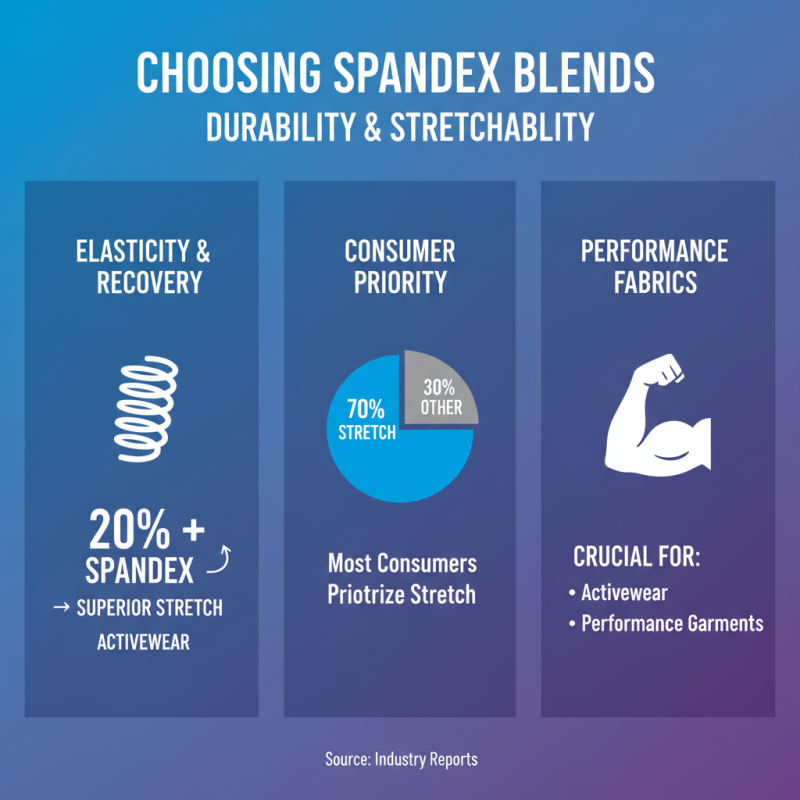
When selecting the right spandex blend, durability and stretchability are key. Fabrics with a higher percentage of spandex, like 20% or more, often offer superior elasticity and recovery. These blends are crucial for activewear and performance garments. Reports indicate that 70% of consumers prioritize stretch when buying clothing.
Cotton-spandex blends are popular as they combine comfort with durability. Typically, an 80/20 mix yields a soft feel with enhanced stretch. However, keep in mind that too much spandex can lead to quicker wear and tear. Some fabrics may lose their shape after multiple washes.
Tips: Always test the fabric for stretch and recovery before making a bulk purchase. Look for spandex materials that maintain their elasticity even after several washes. Evaluate your usage needs closely. For example, casual wear may require less durability compared to sports apparel. Be mindful of how often you'll wear and wash the fabric. Make choices reflecting your specific needs.
Sustainability in Spandex: Eco-Friendly Options and Certifications
When considering spandex, sustainability is often overlooked. Yet, eco-friendly options are on the rise. A report by the Textile Exchange highlights that the demand for sustainable fabrics is increasing. In fact, around 35% of consumers prefer products with eco-friendly certifications. This shift reflects a broader awareness of environmental issues.
Eco-friendly spandex options are available, but they often come with a higher production cost. Manufacturers are exploring alternatives like recycled fibers. For example, spandex derived from post-consumer plastic can reduce waste. These innovations also help in lowering the carbon footprint. However, not all fabrics labeled as eco-friendly meet stringent standards. Certifications like Global Organic Textile Standard (GOTS) ensure that the products adhere to sustainable practices.
Despite these advancements, challenges persist. Eco-friendly production can be more complex. Some companies may greenwash their products, claiming sustainability without proper certification. Consumers must remain vigilant. Research indicates that 70% of shoppers want transparency in sourcing. Being informed helps in making choices that align with eco-friendly values.
Elastic Spandex Fabric Sustainability Comparison
This chart compares various eco-friendly certifications for elastic spandex fabrics, highlighting the percentage of sustainably produced materials in the textile industry.