How to Choose Recycled Pet Fabric for Your Sustainable Projects?
Choosing the right material for sustainable projects is critical. One option gaining traction is Recycled Pet Fabric. This eco-friendly material is made from recycled plastic bottles. It reduces waste and conserves resources. However, not all recycled fabrics are equal.
When selecting Recycled Pet Fabric, consider its source. Look for certifications and labels that guarantee sustainability. It's important to know where the raw materials come from. Transparency in production is vital for true eco-consciousness. Some fabrics may look good but have hidden environmental costs.
Quality also matters. Not all recycled fabrics hold up over time. You might buy a beautiful piece of Recycled Pet Fabric that fades quickly. This leads to waste, which contradicts sustainability. Reflecting on these choices is essential for your project’s overall impact. By carefully assessing your options, you can make a stronger commitment to the environment.
Understanding Recycled PET Fabric: Composition and Benefits
Recycled PET fabric is gaining popularity in sustainable projects. This fabric is made from recycled plastic bottles. Approximately 60 million PET bottles are discarded every day in the United States alone. Converting these bottles into fabric reduces waste, but the process has its complexities.
The composition of recycled PET fabric is significant. Typically, it consists of 100% recycled materials. However, the quality can vary. According to a 2021 report by the Textile Exchange, using recycled PET can reduce carbon emissions by up to 32% compared to virgin polyester. These numbers highlight the potential benefits. Still, not all recycled PET fabrics are equal. Factors like chemical treatments and blending with other materials can influence sustainability.
Choosing the right recycled PET fabric requires careful consideration. Look for certifications that ensure the material's environmental impact. Transparency in sourcing is crucial. Some manufacturers may not disclose their production processes. This lack of transparency can lead to greenwashing, where a product is marketed as eco-friendly without substantial evidence. It's essential to remain critical and informed when selecting materials for sustainable projects.
How to Choose Recycled Pet Fabric for Your Sustainable Projects?
| Aspect |
Details |
| Material Composition |
Recycled polyester (RPET) created from post-consumer PET bottles |
| Environmental Impact |
Reduces plastic waste; lowers carbon footprint compared to virgin polyester |
| Durability |
Highly durable, resistant to stretching, shrinking, and wrinkling |
| Water Resistance |
Offers good water resistance; ideal for outdoor applications |
| Texture & Feel |
Soft and comfortable to touch, can mimic the appearance of cotton |
| Color Options |
Available in a wide range of colors and can be dyed easily |
| Care Instructions |
Machine washable; quick drying; easy to maintain |
Identifying Sustainable Fabric Certifications for Recycled PET
When selecting recycled PET fabric for sustainable projects, it's crucial to identify the fabric certifications that ensure it meets environmental standards. Certifications can indicate a true commitment to sustainability. Look for labels like Global Recycled Standard or Recycled Claim Standard. These certifications confirm the material's recycled content and responsible production processes.
However, navigating through these certifications can be challenging. Not all brands may showcase their certifications clearly. Some may use vague terms that don’t guarantee sustainability. Take time to research the certifications and their requirements. Consider visiting manufacturers' websites or asking for detailed information.
It's also important to reflect on the sourcing of the fabrics. Are they produced ethically? Do the processes minimize carbon footprint? Engaging in dialogue with suppliers can reveal a lot. Sometimes, transparency is lacking, making it hard to make informed choices. Prioritize suppliers who are willing to share their sustainability practices.
Evaluating Durability and Performance of Recycled PET Fabrics
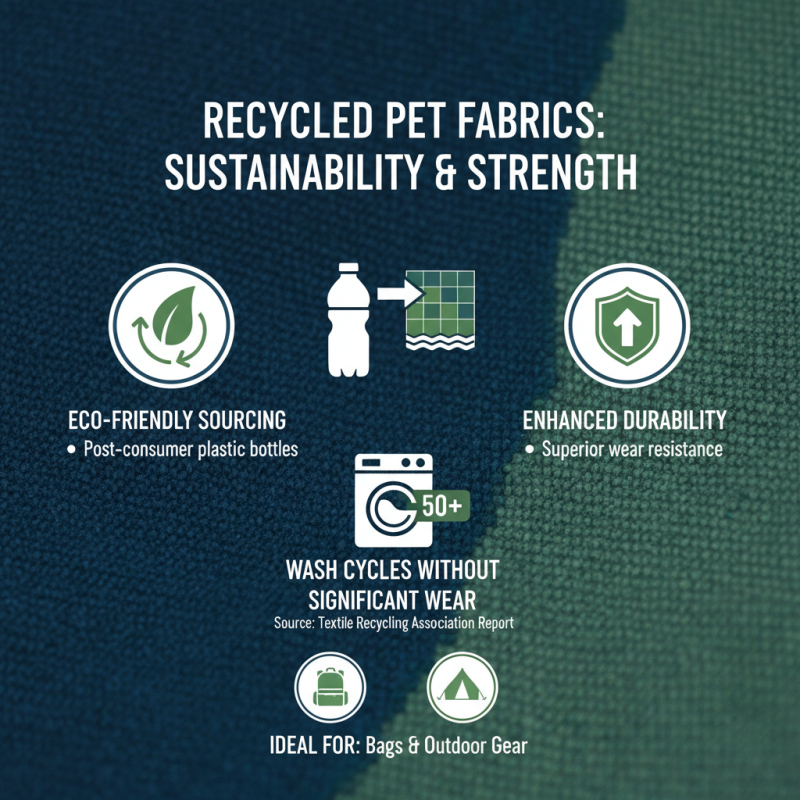
When selecting recycled PET fabrics for sustainable projects, evaluating durability and performance is crucial. Recycled PET, sourced from post-consumer plastic bottles, often exhibits superior durability. According to a report by the Textile Recycling Association, these fabrics can withstand more than 50 washes without significant wear. Such resilience makes them ideal for products like bags and outdoor gear.
However, performance can vary. Some recycled PET fabrics may not perform as well as virgin alternatives in extreme conditions. A study by the Sustainable Apparel Coalition noted that recycled fabrics could show a decline in tensile strength after extensive exposure to UV rays. This can affect the longevity of outdoor apparel.
Designers should also consider texture and feel. Not all recycled PET fabrics are alike; some may feel rough, while others can be soft and comfortable. The consumer experience should not be overlooked. While many recycled options are available, finding the right balance between sustainability and quality is essential. It’s a reminder that not all recycled fabrics meet high-performance standards, and careful evaluation is necessary.
Factors to Consider: Color, Texture, and Cost of Recycled PET
When selecting recycled PET fabric for your sustainable projects, color, texture, and cost are crucial factors. Color can significantly impact your project's aesthetics. Some recycled PET fabrics come with vibrant hues, while others have a more muted palette. Interestingly, the manufacturing process can affect color intensity. Sustainability reports indicate that about 70% of recycled materials may not retain the same vivid colors as virgin materials. This means careful selection might be necessary to achieve your desired look.
Texture is another important aspect. Recycled PET can vary widely in texture, from smooth to coarse. This variability arises from the source materials and production techniques used. A rough texture might suit outdoor or heavy-duty applications, while a smoother finish may be desired for fashion apparel. According to industry data, 60% of consumers prefer soft touch and feel in sustainable textiles. This highlights the importance of testing and sampling before final decisions.
Cost cannot be overlooked. Recycled PET fabrics may be more expensive than conventional options. Reports suggest a 20-30% price increase on average. However, it's crucial to analyze the long-term benefits of using sustainable materials. Investing in quality recycled fabric may result in reduced waste and enhanced brand image. Reflecting on these factors can refine your choice and support your project's success.
Recycled PET Fabric Selection Factors
How to Source and Purchase Recycled PET Fabric for Projects
When sourcing recycled PET fabric for your projects, consider the source's credibility. Reports show that recycled PET (rPET) can reduce carbon emissions by up to 79% compared to virgin polyester. This significant reduction makes rPET a popular choice among eco-conscious designers. Analyzing the supply chain is crucial. Transparency helps ensure sustainable practices are in place.
Quality varies across suppliers. Not every recycled fabric is equal. Look for certifications that indicate responsible sourcing. In 2020, the global rPET market reached approximately $5 billion, indicating a growing demand for sustainable materials. Different grades of rPET can affect durability and appearance. Always ask for samples before purchasing.
Research the suppliers’ eco-friendly practices. Not all companies engage equally in sustainability. Many still rely on less ethical practices. Therefore, you might discover discrepancies in pricing and quality. It's essential to evaluate their production processes. Assess how they handle waste and their energy consumption. Such details can impact the overall sustainability of your project.